Timeline:
12/21 - 6/22, 12/23 - 3/24
Tools:
Background
During my studies in Shenkar, I joined a course in 'Intro' - an entrepreneurship club.
We worked in teams, investigated our ideas to understand if they had viability and refined them according to the insights we got.
Our Team & Roles

Yulia Gur
Industrial Engineer
Avoids parsley
Research
Business module

Tamir Burstein
Industrial Engineer
Hates broccoli
Research
Business module


Our mentor:

Ilan Gershon
Finance, Strategy, Operations and Legal Executive
The Problem
The growing variety of restaurants and dishes to choose from nowadays is making decision-making more difficult for people with dietary limitations.
If someone hates onions, for example, going through each meal on the menu to check for them can be a tedious process, usually they can ask the waitress about it, but they might want to skip this process if they could. Similarly, a vegetarian looking for a place to eat probably isn't interested in steakhouses but will often still need to sort through them.
We assumed that by hiding irrelevant options choosing will get easier.
Our next step was to see it this problem is just in our head or if other people experience the same struggles
User Survey
The Customer’s pain
According to a survey which included 81 participants:
72%
Of the participants avoid certain foods
87%
Read most of the menu
27% of them also ask the staff for advice
52%
Stated they would preferer a personalized menu
Interesting things participants said:
“When sitting in a restaurant I will always prefer speaking with the employees. When ordering takeout I would prefer a detailed app that is easy to use.”
“It’s a nice idea but I think there are similar apps, I use the Wolt, 10bis and Easy.”
“Cool idea, as a vegetarian and a picky eater I think it would suit me”.
The Restaurant’s pain
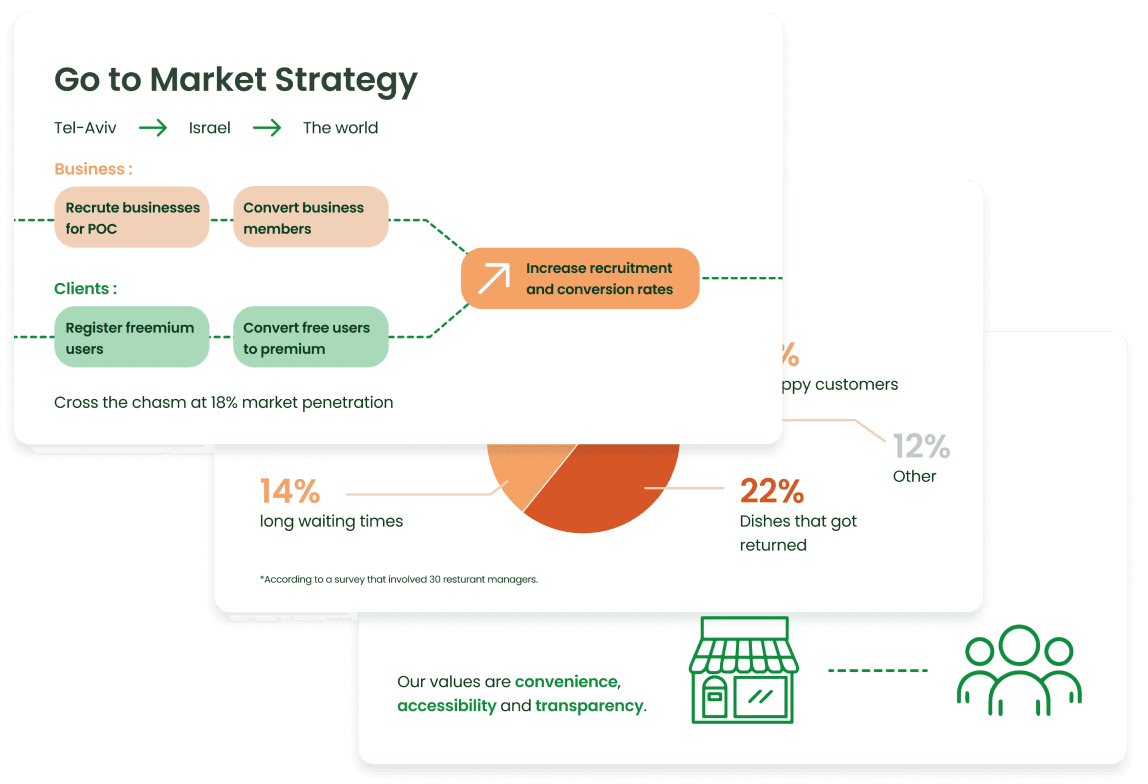
We interviewed 30 restaurant managers, these where the biggest pain points:
While for some these where issues, others saw it as part of the job, their bottom line was that they will use the product if they see that it's profitable.
We also got an advice from the head of a restaurant association, according to him if the clients will use the product and it will bring traffic - that's when the restaurants will use it too.
Other considerations
To filter out dishes by their ingredients, we would need restaurants to enter what each dish contains. One of our concerns was they wouldn't be willing to do so, to our surprise none of them saw it as a problem.
Competition


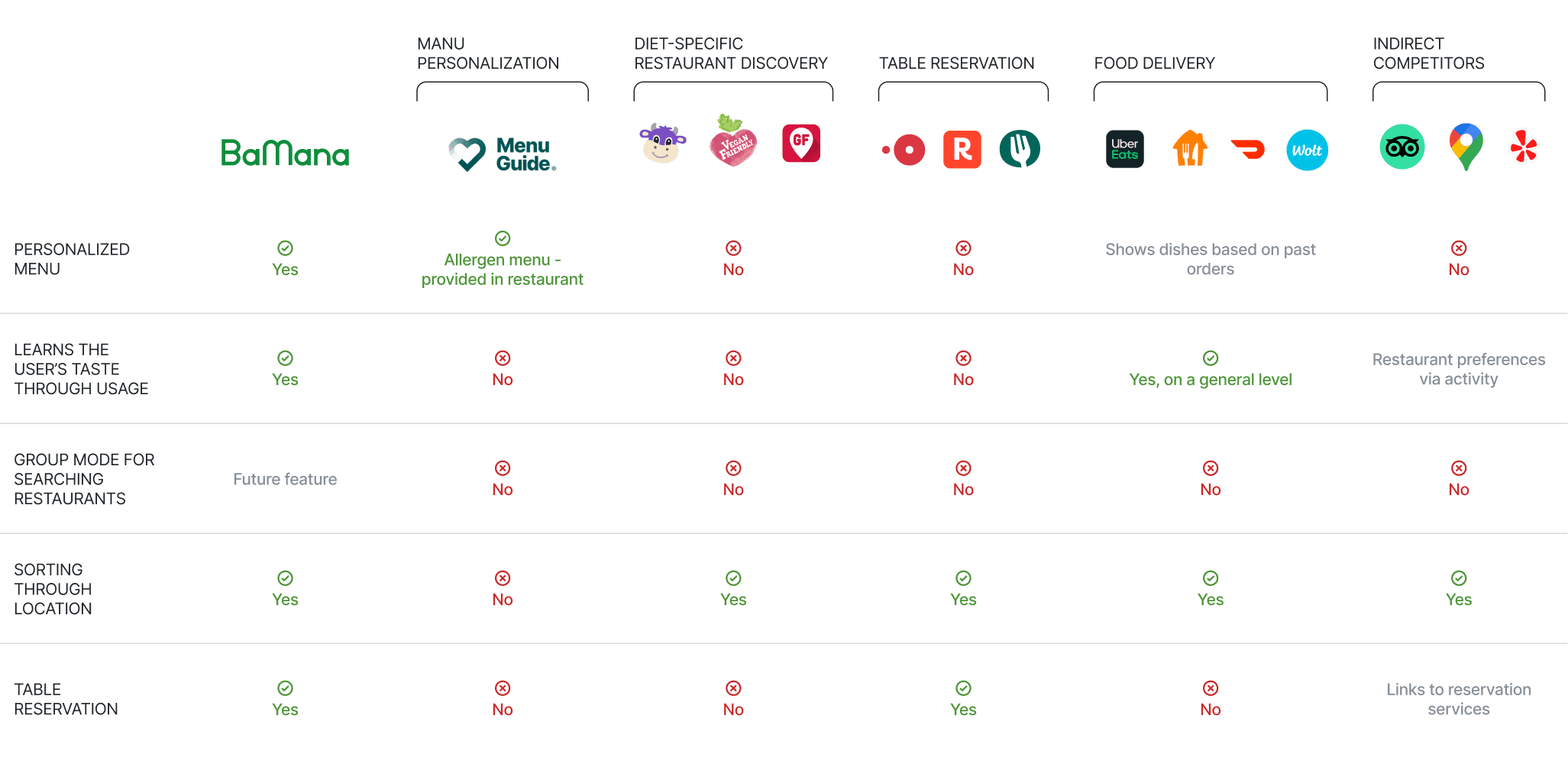
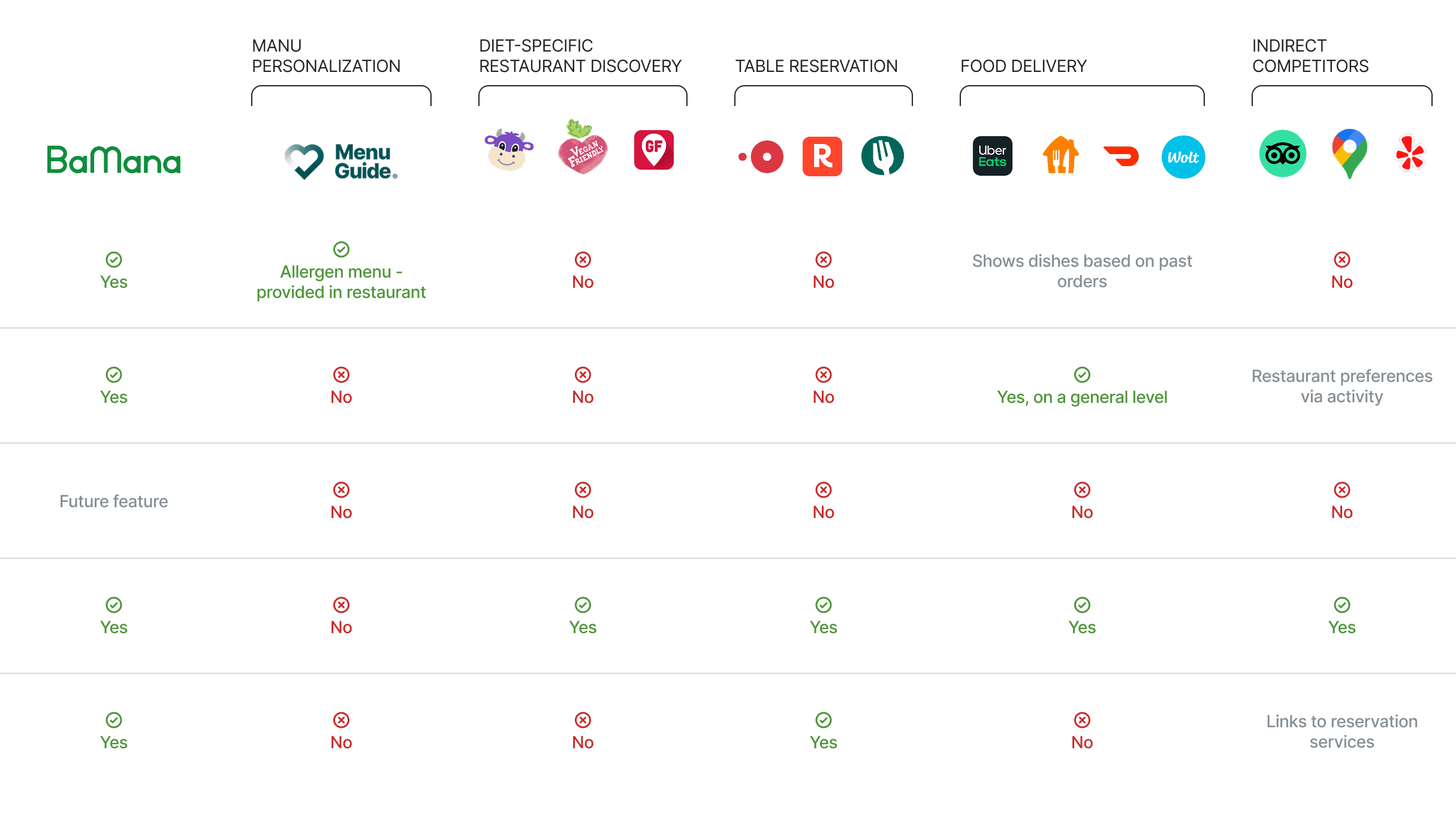
The biggest conclusion from our analysis was that none of the companies provided users with restaurant or dish suggestions that where deeply focused on their personal taste. Most suggestions where general: like favourite cuisines or general dietary restrictions.
Almost non of the competitors dived deeper: to the ingredient level. That's where we could differentiate our product and create something that people need but don't have.
Target audience
B2C Customers
B2B Customers
Restaurants & Coffee shops
Bars with large food menus
Especially businesses with:
A variety of options on the menu
Crowds of visitors
Market target

The Global market
About $1.2 trillion a year

The Israeli market
About ₪20 billion a year
The Pitch Night
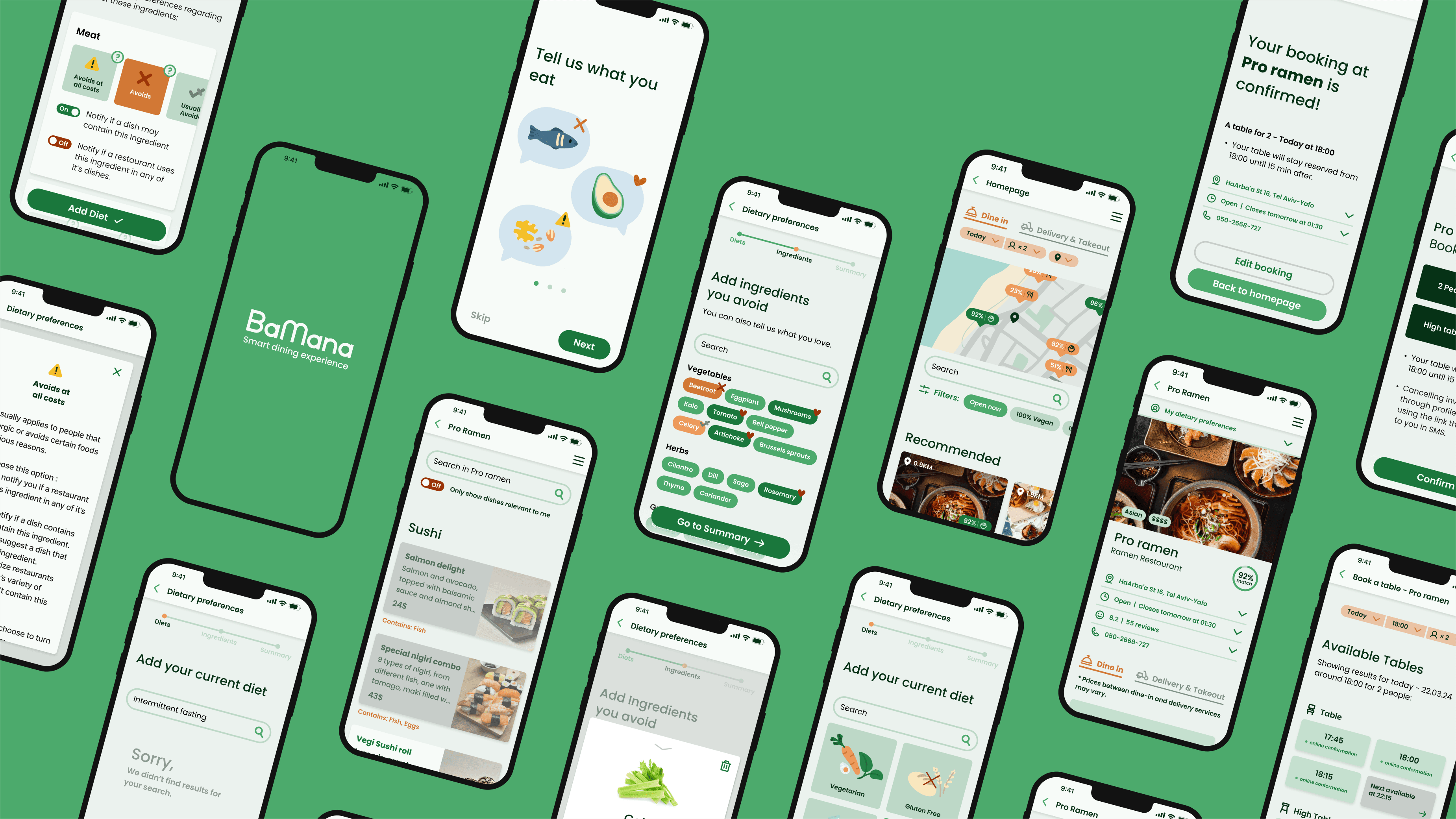
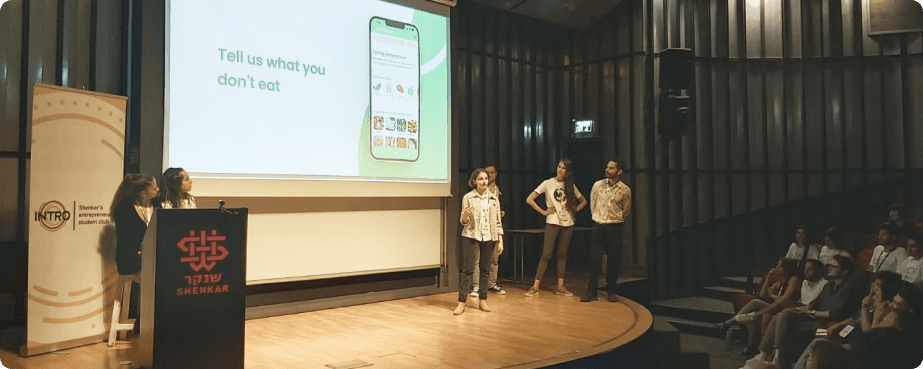
Equipped with our presentation, one pager, and 4 main screens that represented our app at the time, we gave a pitch in front of an audience and a panel of industry professionals who served as judges.
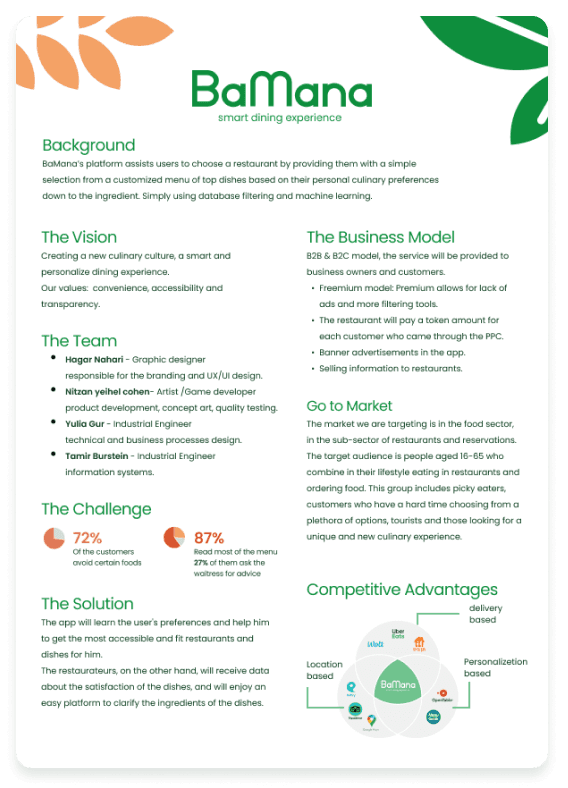
During the course our main focus was to validate the idea, afterwards I decided to dive deeper into the user experience.
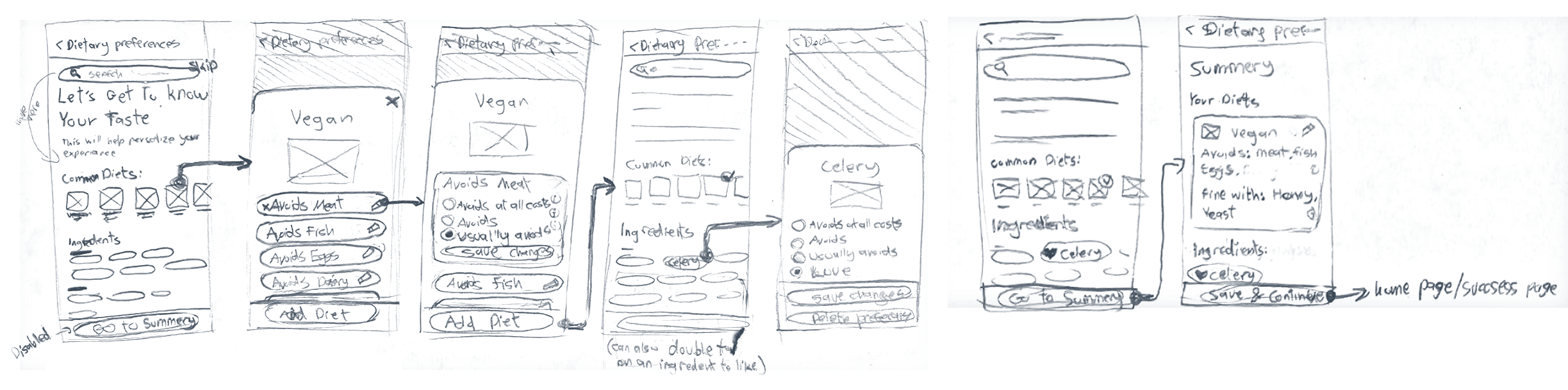
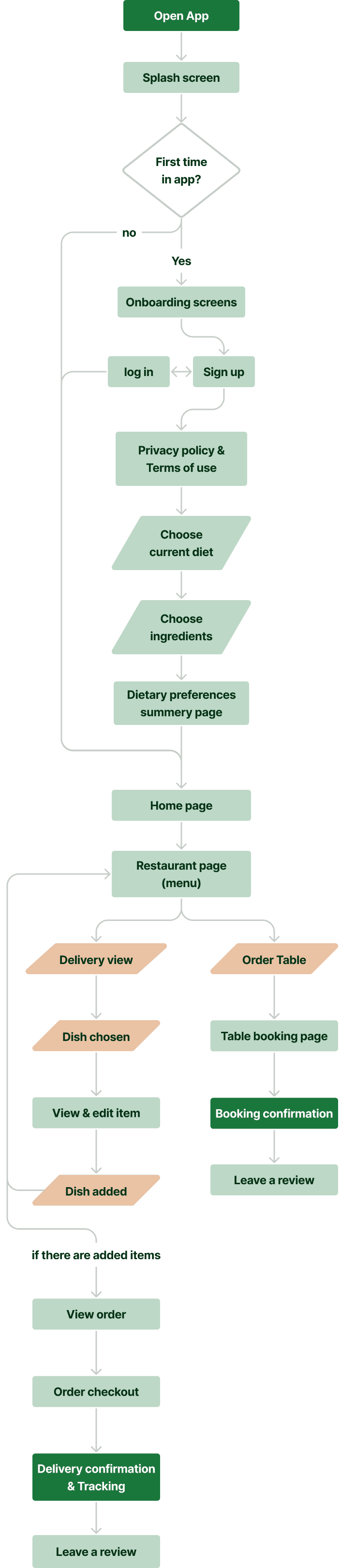
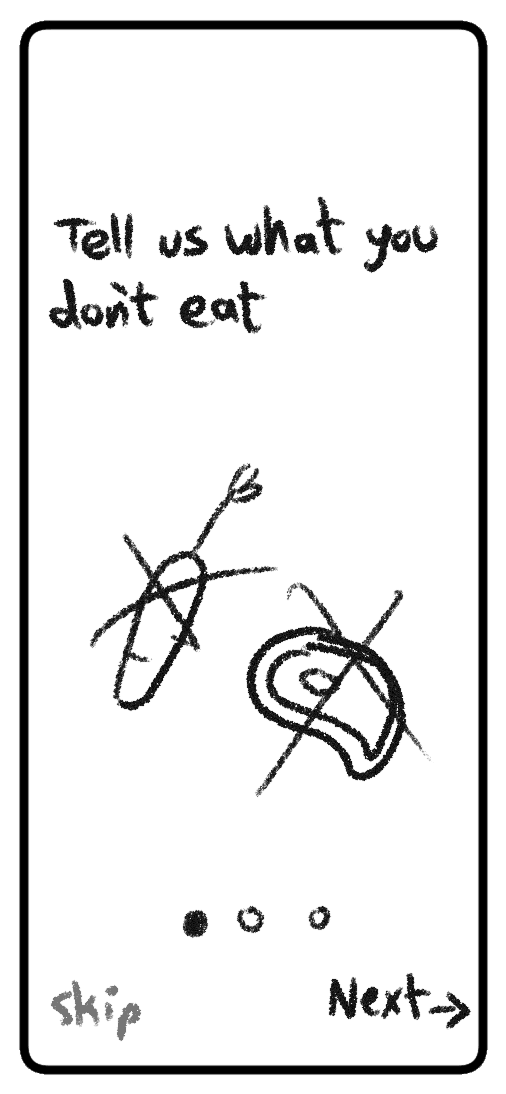
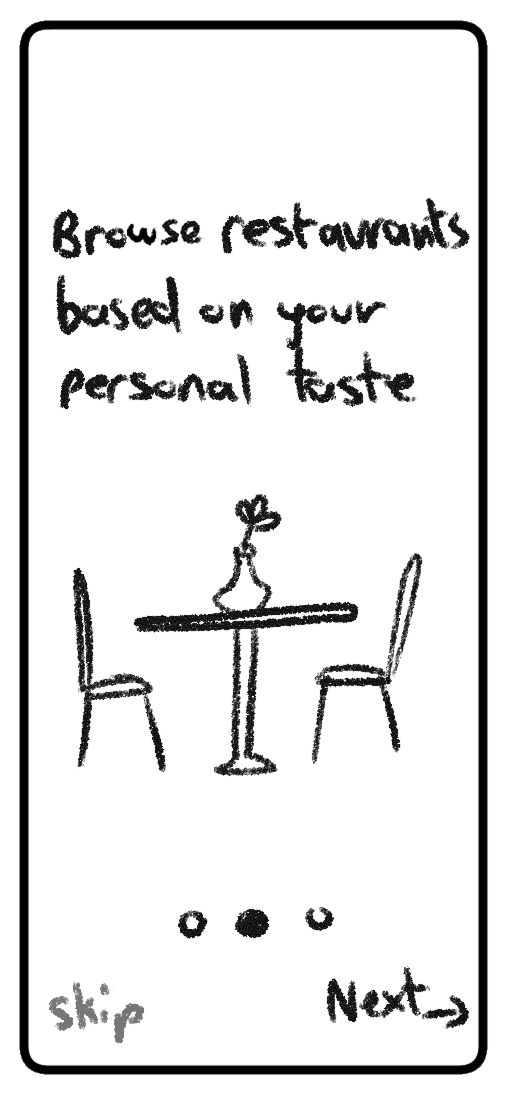
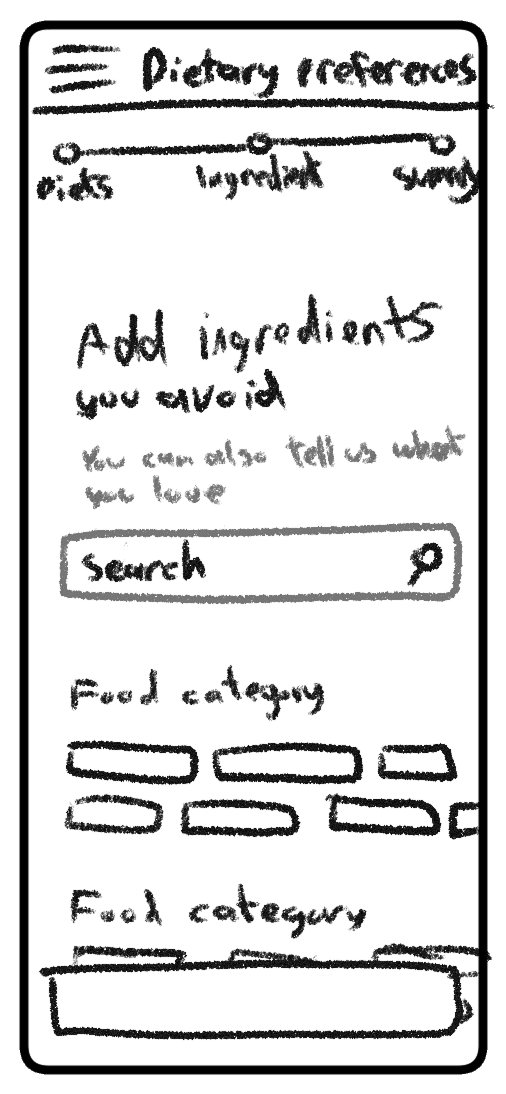
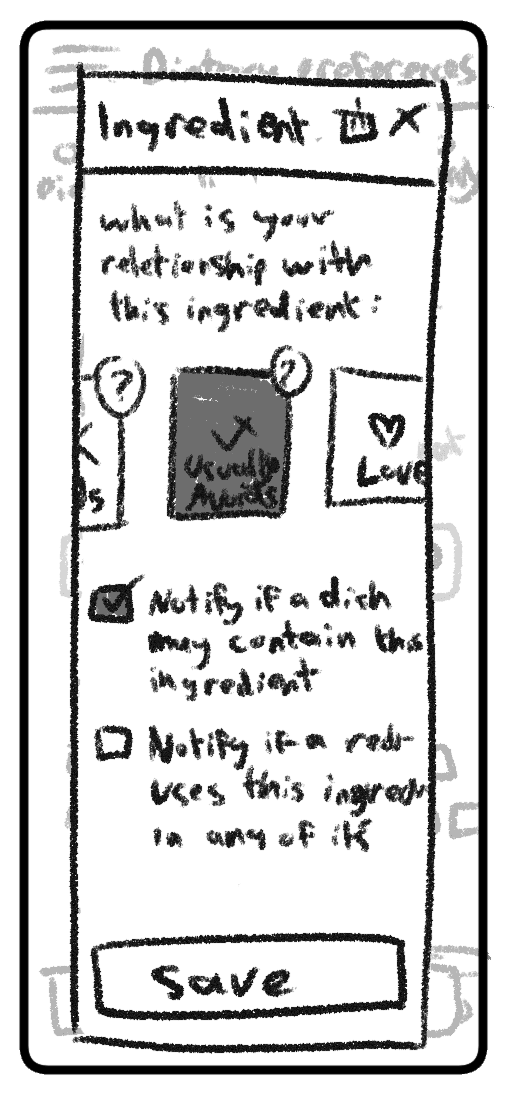
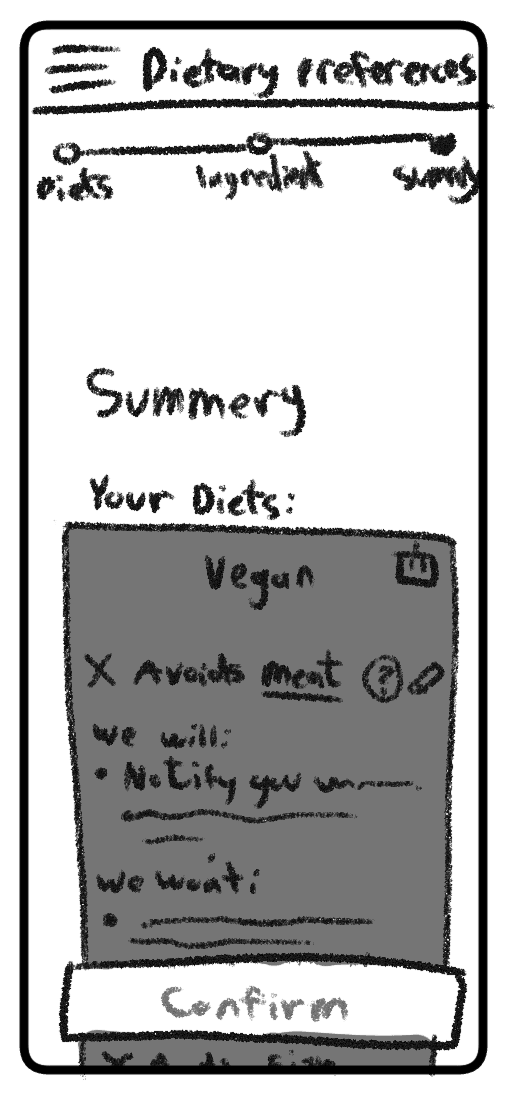
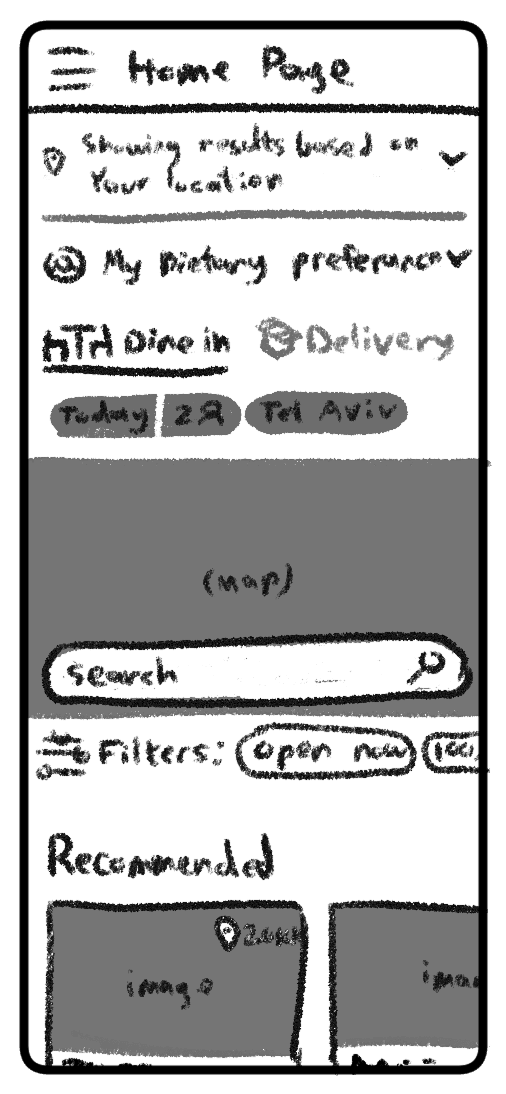
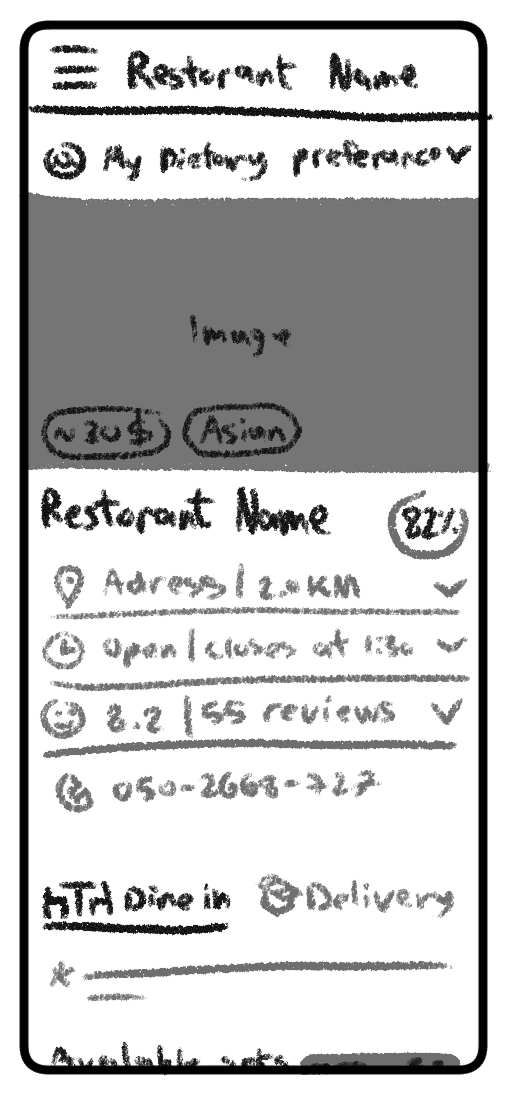
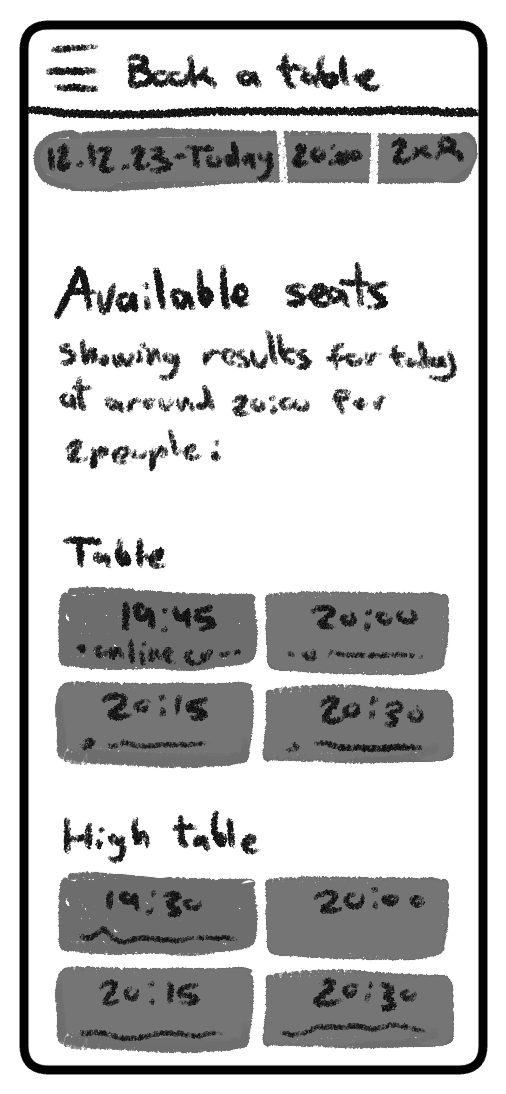
I started by updating the user flow, then expanded our competitor analysis to explore how their products are designed and what I can learn from them. This gave me a broader picture on what are the current conventions. I also created personas, wireframes, and new screens.
Personas




User flow

Wireframes

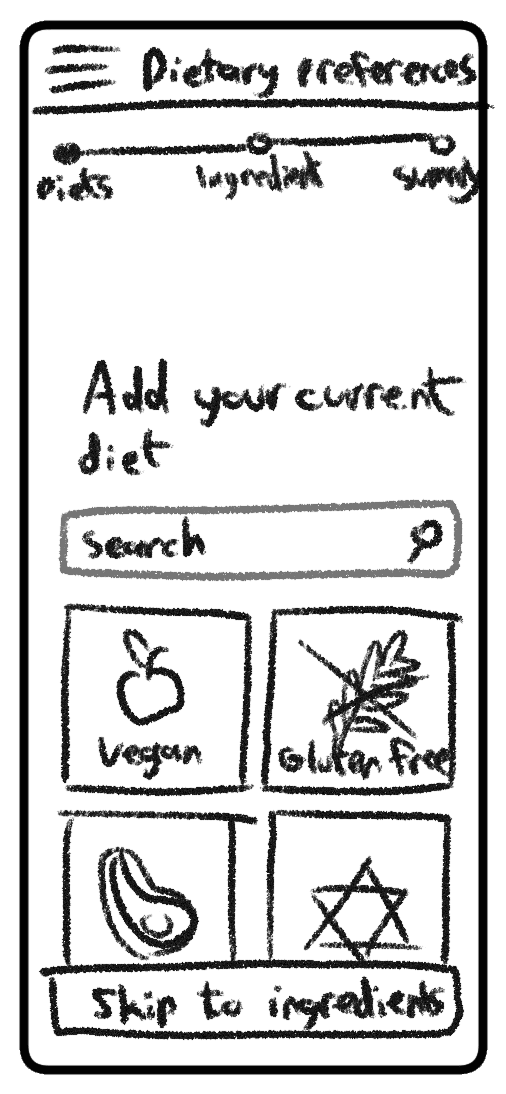
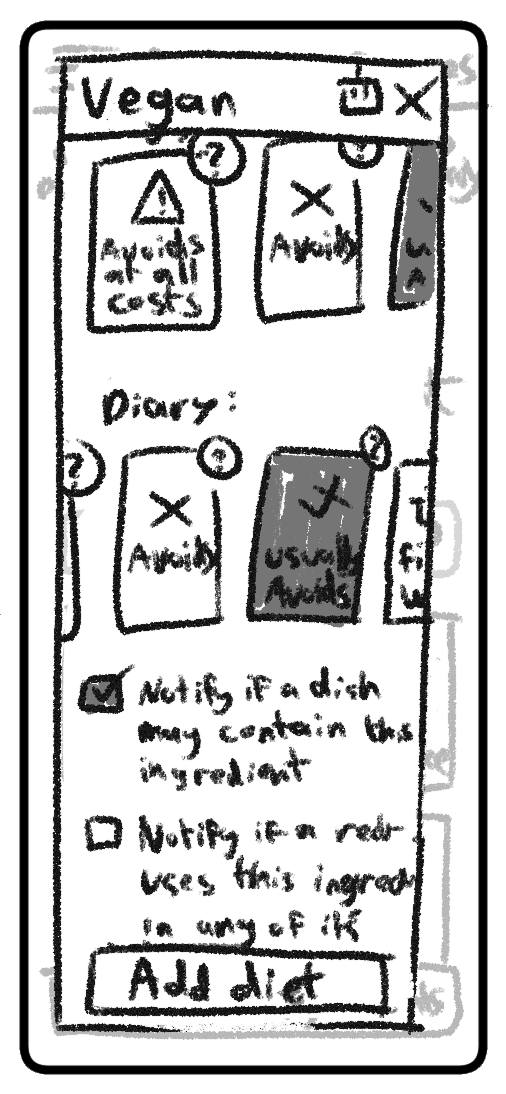
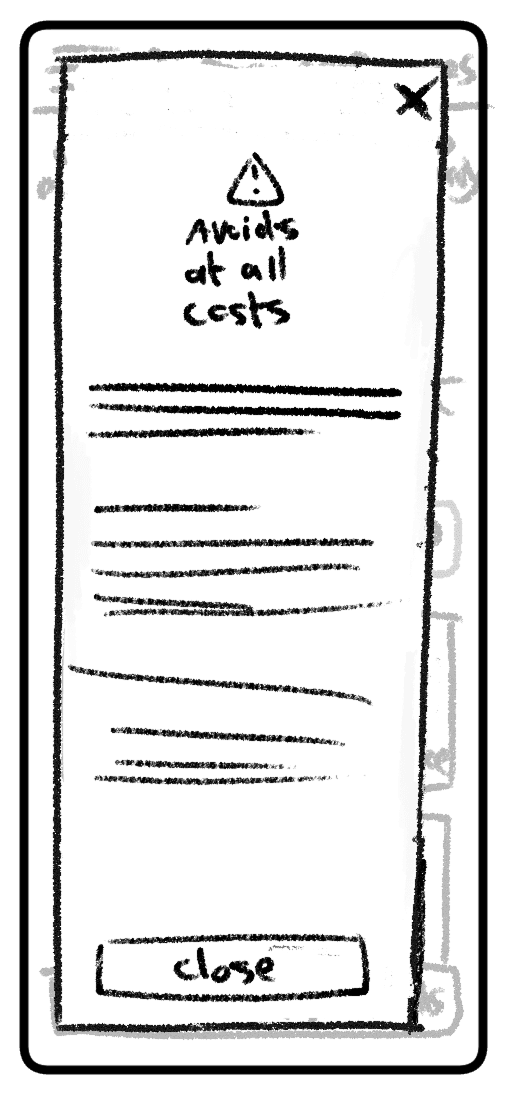
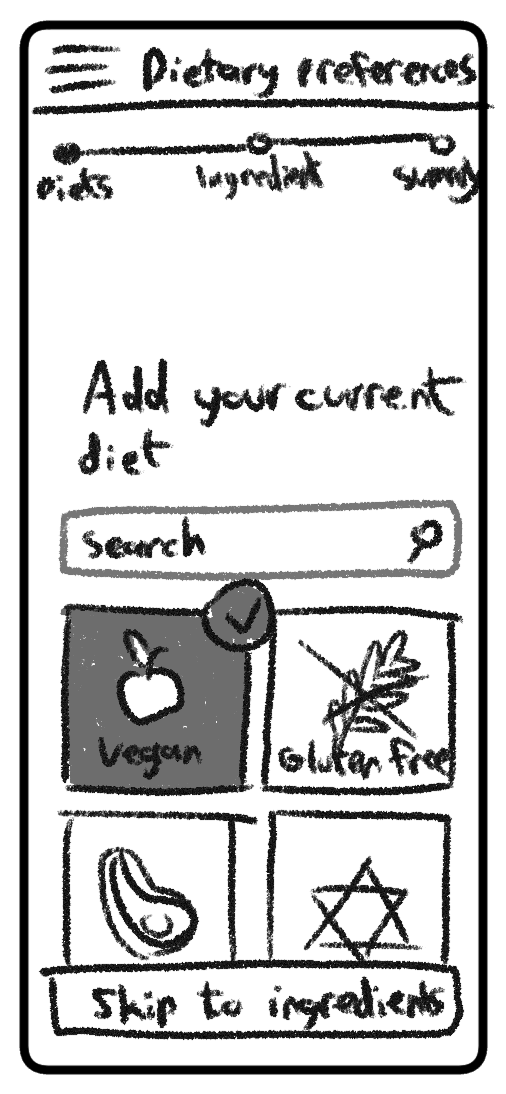

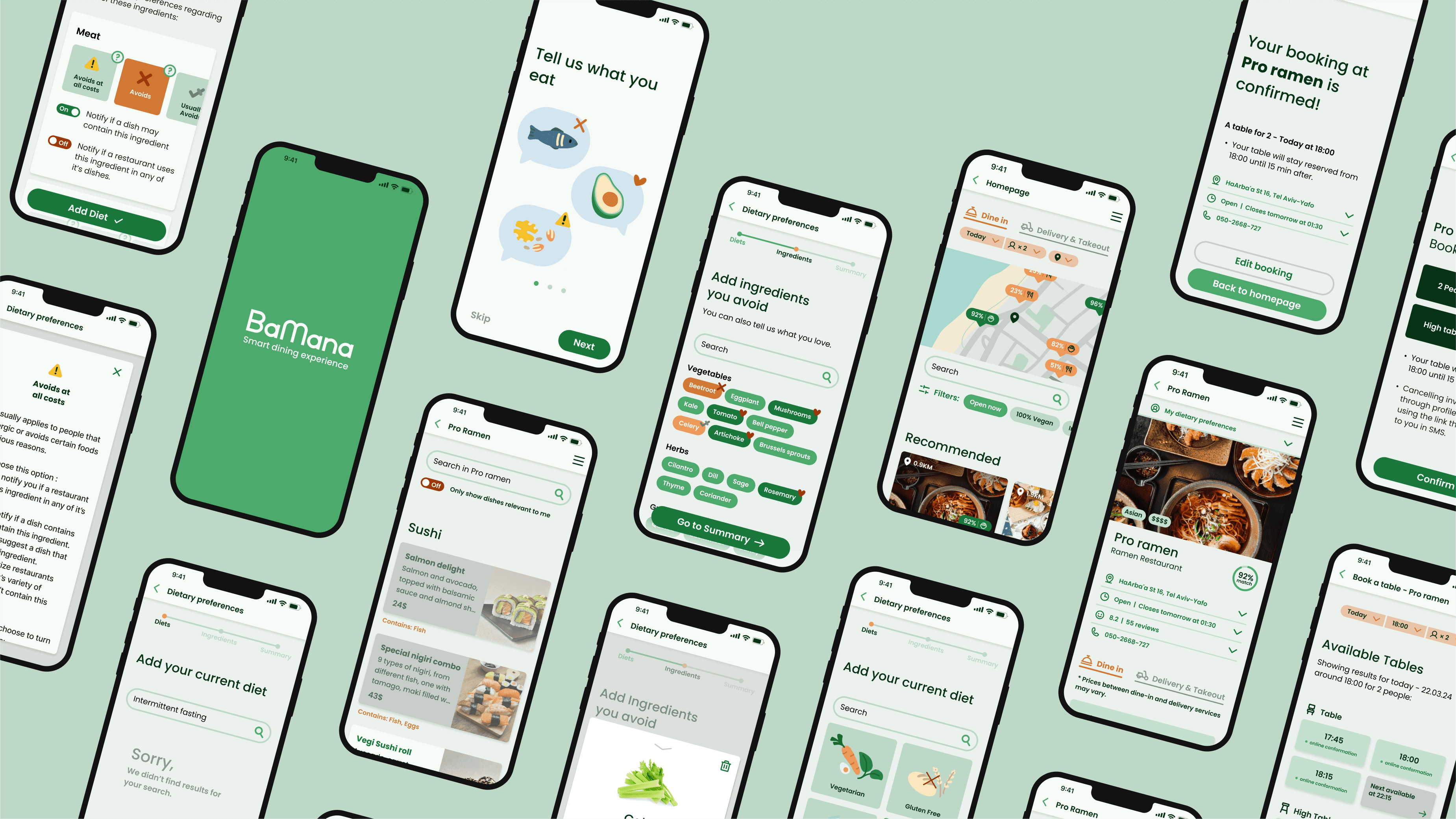
The Result
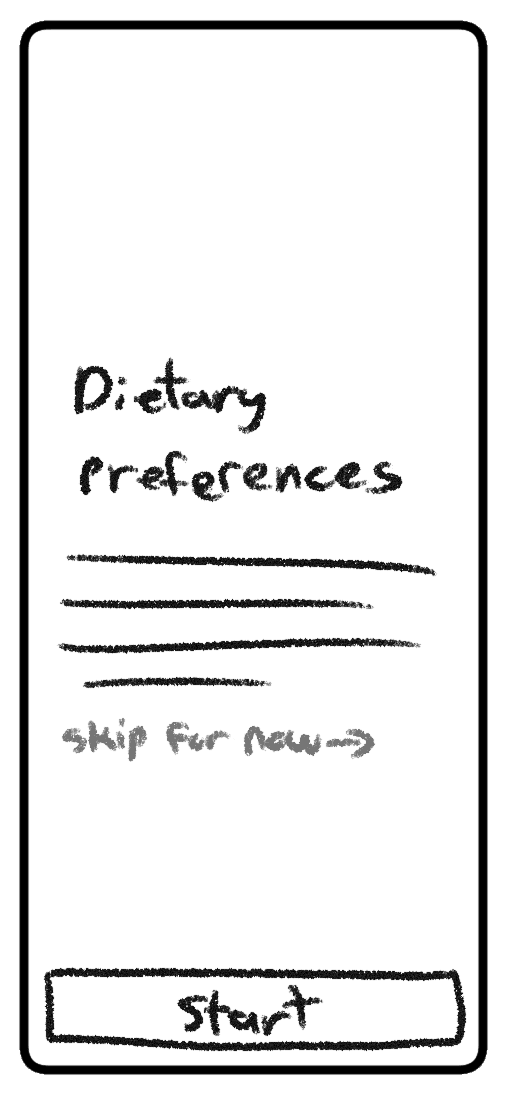
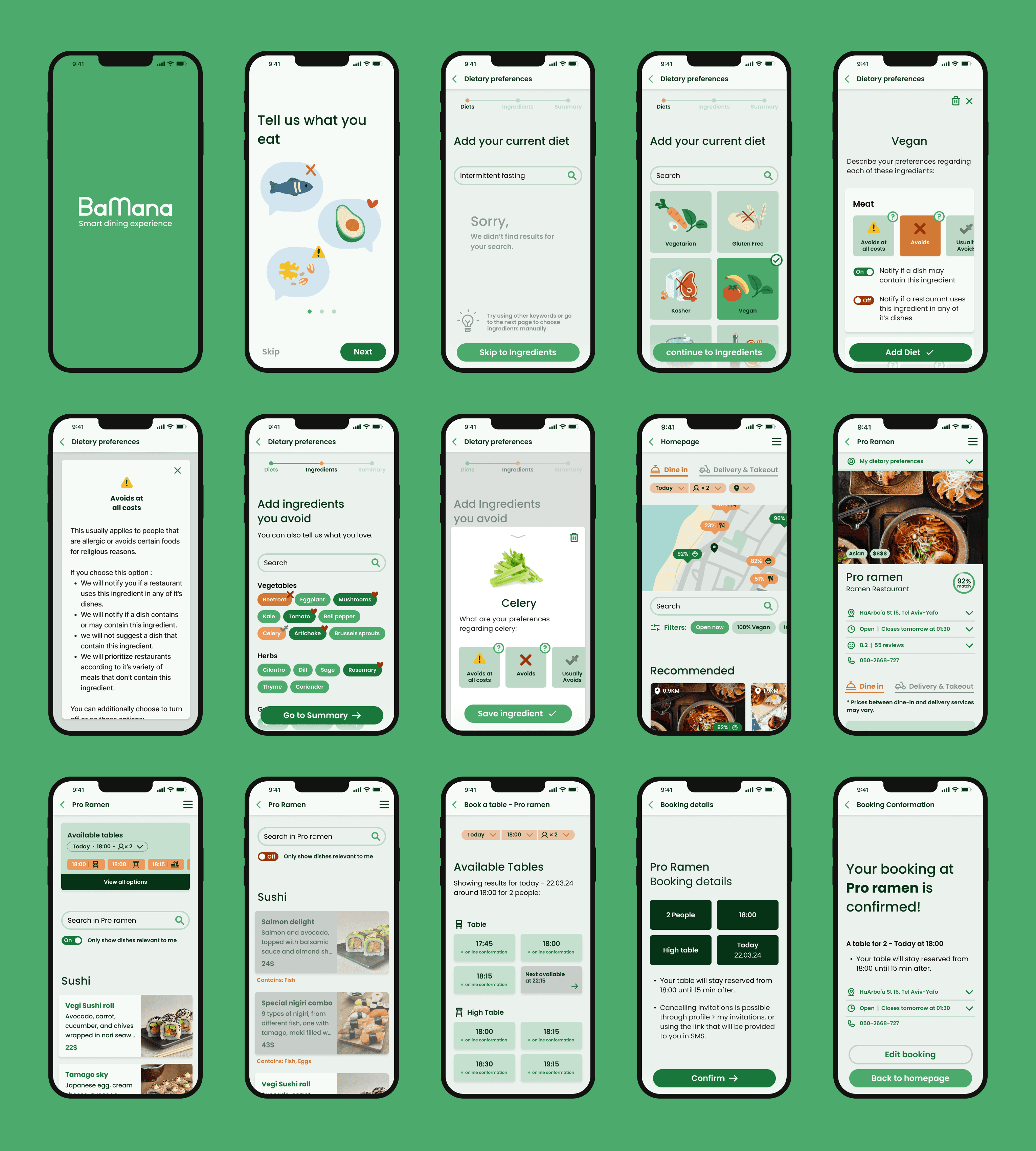
Tell us what you eat
In this section, users fill in their dietary preferences. This can include a diet or specific ingredients.
To meet as many needs as possible I allowed the users to specify how strict they are with each ingredient.
Browse restaurants based on your personal taste
The homepage is based on the user’s preferences, each restaurant receives a score depending on its match with the user.
This would hopefully help people make better and easier choices.
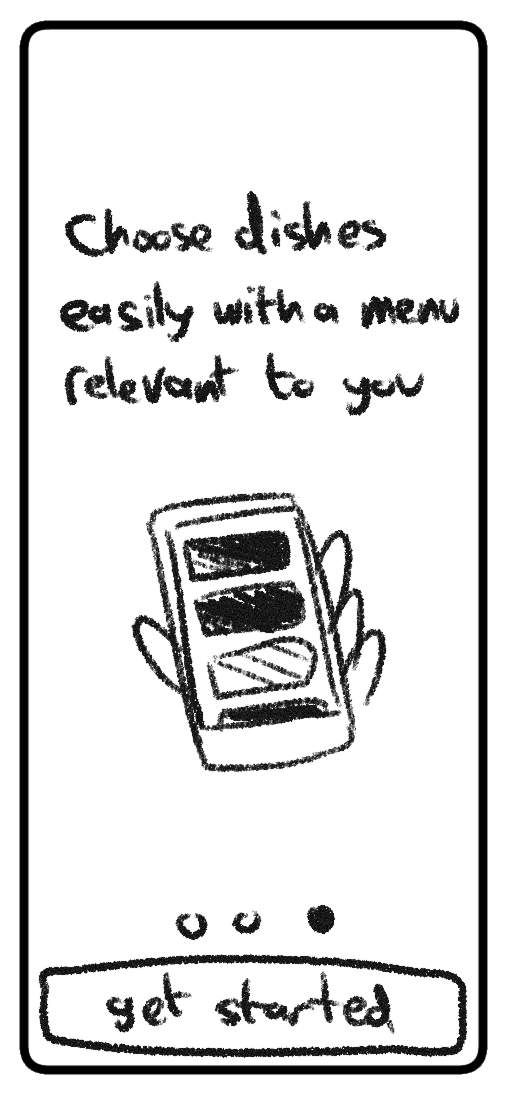
Choose dishes easily with a menu relevant to you
The highlight of this app, in my opinion, is the menu.
Users can effortlessly skip dishes that are irrelevant to them, even if their dietary preferences are not common.
For some this may not make much difference, but for others, it can significantly simplify their lives.
Reflection & Next steps
In this project, one of the most useful things I learned was that even if you have a very simple idea, it could get more complex than you would expect.
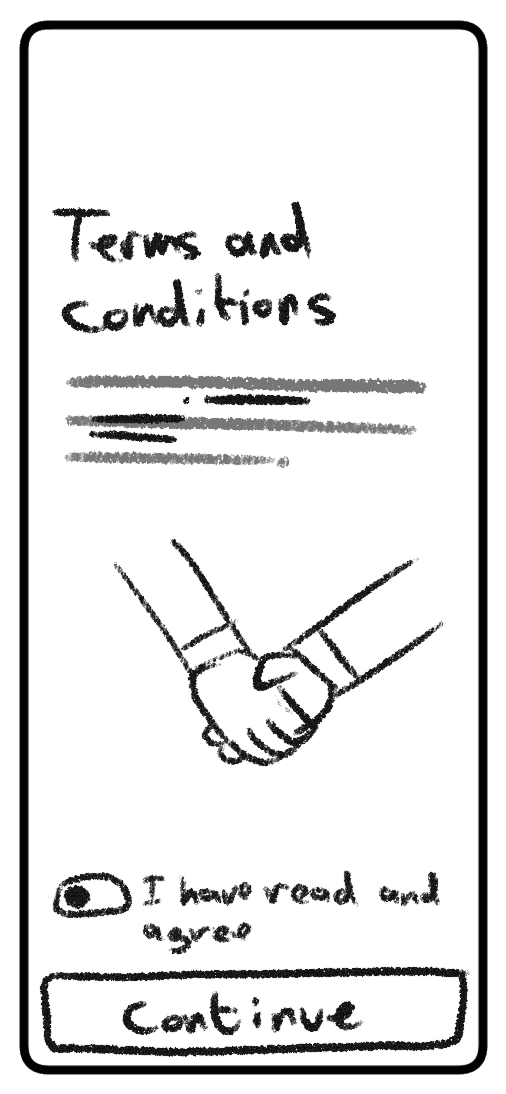
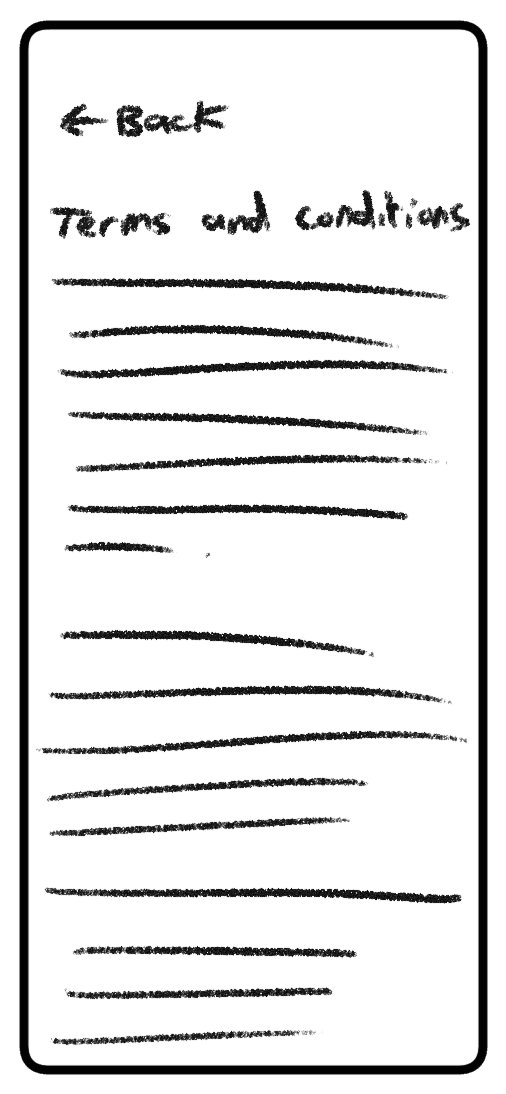
In retrospect, I can clearly see now that the onboarding can be significantly improved. The current design forces the user to make too many choices; some can be avoided in order to cause less churn.
My next step will be to do another iteration, which will include conducting a user test on the current design.
In the meantime, here are my initial thoughts on how I might change the onboarding process. These may, of course, change after I conduct the user test: